Democrats have a crowded bench of would-be leaders. Their problem is that the party's energy is moving in a hundred directions.
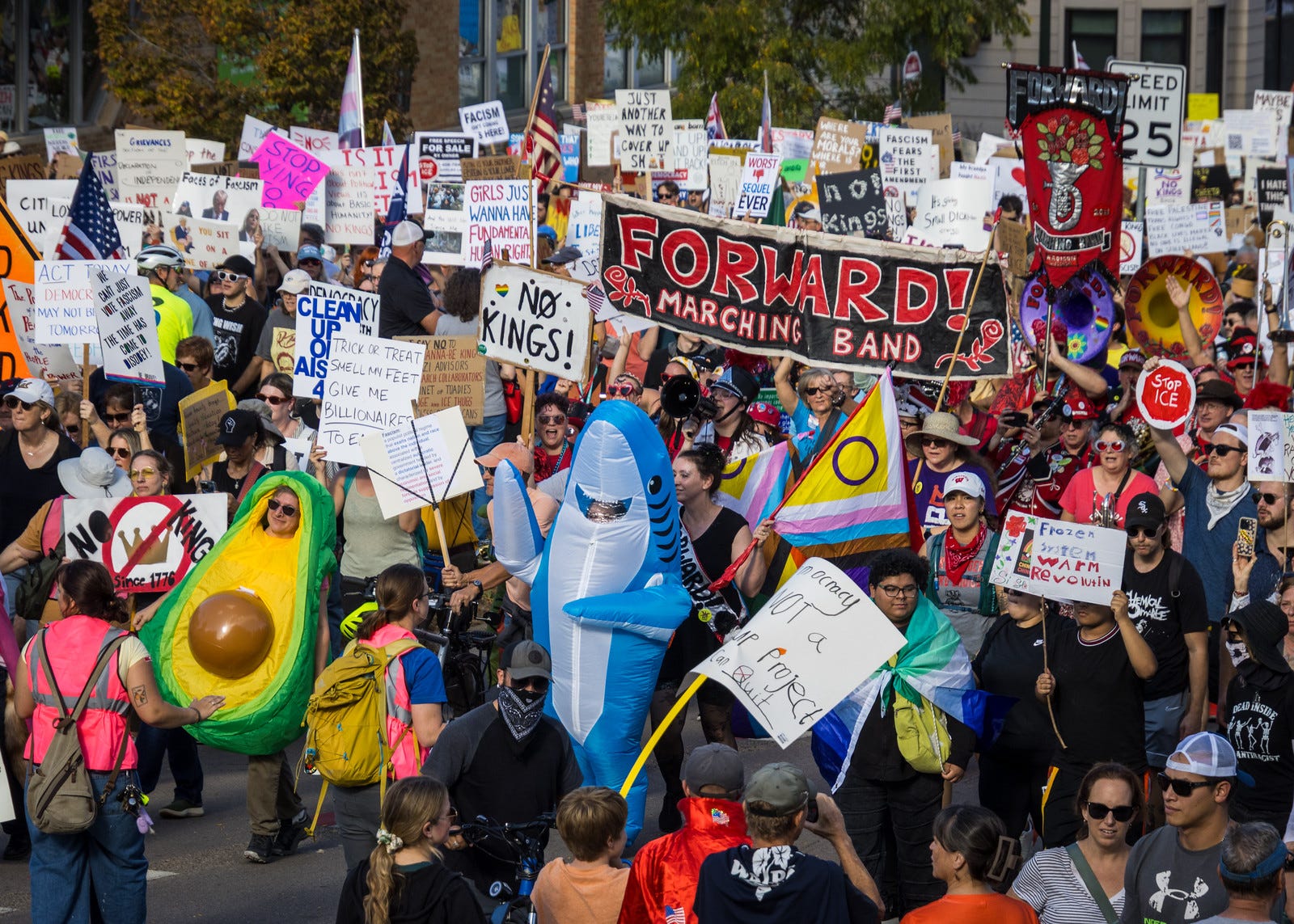
Democrats do not lack ambitious people. They have governors, senators, House leaders, movement stars, media-savvy mayors, billionaire donors, union machines, online influencers, progressive organizers and presidential hopefuls already positioning themselves for 2028.
On paper, that can look like a strong bench. In practice, it increasingly looks like a party whose leadership is fragmenting.
Hakeem Jeffries may lead the House caucus. Gavin Newsom may chase the presidential nomination. Zohran Mamdani may lead the insurgents. Democratic Socialists of America chapters, Twitch streamers and volunteer armies may lead the base. The question is no longer simply who will lead the Democratic Party. The question is whether the Democratic Party is still capable of being led.
That is the problem hiding inside the party’s supposed embarrassment of riches. Democrats have plenty of people who want influence. They have fewer people who can plausibly unite the party’s competing instincts: institutional liberalism, anti-Trump resistance, democratic socialism, identity politics, donor-friendly pragmatism and the desperate desire to look normal again to voters outside the deepest blue enclaves.
The recent socialist surge in New York made the problem impossible to ignore. Candidates backed by Mamdani and the DSA scored major primary victories, including wins over Democratic incumbents and establishment-backed figures. Some of these races took place in districts so blue that the Democratic primary was effectively the election. That means the insurgents were not merely sending a message. They were sending future members of Congress.
This is not just a New York story. Colorado Democrats are now bracing for their own insurgent challenge, with long-serving Rep. Diana DeGette facing Melat Kiros, a young democratic socialist backed by the kind of volunteer-heavy organizing that powered recent left-wing wins elsewhere. The model is clear: identify complacent incumbents, overwhelm them in low-turnout primaries, nationalize the race through online activism and frame every establishment defense as proof that the old party is corrupt.
That is how insurgencies grow. Not all at once. Not by winning over the median voter. By changing who shows up, who volunteers, who donates and who is willing to punish politicians who once assumed they were safe.
The result is a leadership challenge from below. The old Democratic establishment still has money, endorsements and seniority. The insurgent left has urgency. In modern politics, urgency often beats seniority.
Jeffries now stands at the center of that tension. If Democrats win back the House, he is the obvious candidate for speaker. But a narrow majority with a restless left flank would be a very different challenge from leading a minority caucus united mostly by opposition to Donald Trump. A handful of members willing to withhold votes, embarrass leadership or demand symbolic fights over Israel, immigration, policing or health care could make Jeffries’ job look less like Nancy Pelosi’s and more like Kevin McCarthy’s.
Pelosi managed the Squad by embracing them when useful and minimizing their power when necessary. She had decades of accumulated loyalty, fear, favors and institutional authority. Jeffries is disciplined and talented, but he is operating in a more online, more populist, more anti-institutional Democratic Party. He may inherit the gavel just as the caucus becomes harder to govern.
Then there is Newsom, who represents a different kind of leadership problem. He is not a socialist insurgent. He is a polished, donor-friendly governor from America’s most important blue state. He knows how to talk to Silicon Valley, cable news and national Democratic activists. Yet even Newsom is now trying to thread the needle between opposing a California wealth tax and endorsing a national billionaire tax.
That is not leadership so much as triangulation under pressure. Newsom seems to understand the practical danger of driving wealthy taxpayers out of California. But he also understands the political danger of sounding insufficiently hostile to billionaires in a party where “tax the rich” has become less a policy debate than a loyalty test.
This is the Democratic dilemma in miniature. The party’s most ambitious national figures are not clearly resisting the leftward pull. They are trying to survive it, rebrand it or redirect it.
Meanwhile, the activist left is not waiting for permission. It has candidates, slogans, influencers, organizers and a theory of power. It believes the establishment is weak because, in many places, the establishment has become weak. It believes Democratic voters want fighters because many Democratic primary voters plainly do. And it believes that moral intensity can compensate for doubts about electability.
Maybe that works in Brooklyn, Queens, Denver or San Francisco. But Democrats still have to win Michigan, Pennsylvania, Wisconsin, Arizona, Georgia and North Carolina. They still need suburban parents, working-class voters, independents and people who are not spending their evenings watching livestreamed phone banks for socialist candidates.
That is where the race to “normal” begins.
Republicans see the opening. They will gladly make Mamdani and the DSA the face of the Democratic Party, just as Democrats spent years making the House Freedom Caucus the face of the GOP. The comparison is imperfect, but the danger is obvious. A faction does not have to control a party to define it. It only has to be loud enough, organized enough and useful enough to the opposition.
The Democratic Party’s next leader will need to answer a deceptively simple question: What is the party for?
Is it for defeating Trump? For democratic socialism? For protecting institutions? For punishing billionaires? For union power? For Gaza activism? For affordability? For restoring “normalcy”? Every faction has its answer. None has yet proven it can carry the whole party.
That is why the crowded field should not comfort Democrats. A party with a clear direction usually produces a clear leader. A party with too many leaders may be telling us something else.
Jeffries may lead the caucus. Newsom may chase the nomination. Mamdani may lead the insurgents. Organizers may lead the base.
But unless Democrats can rediscover a center, they may discover that what they have is not an embarrassment of riches.
It is just an embarrassment.
(Contributing writer, Brooke Bell)